



BROTHER BRIDGE×KAMIYA
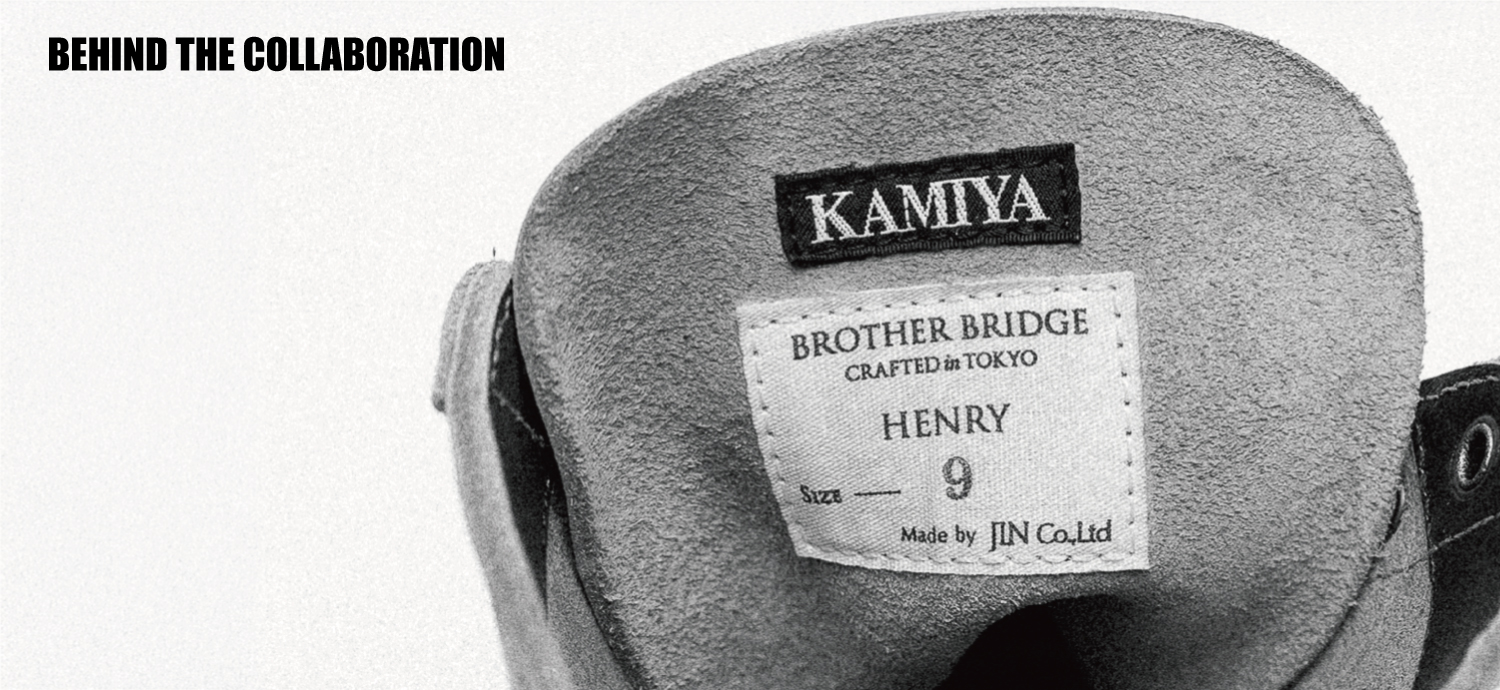
01| BROTHER BRIDGE × KAMIYA ×
Tokyo’s eastern neighborhoods—Ueno, Iriya, and Asakusa, broadly known as the city’s shitamachi—have long been rooted in a culture of craftsmanship and making. Based in Iriya, with its factory in nearby Asakusa, BROTHER BRIDGE has in recent years established a strong reputation for producing and selling footwear made in Japan, with a particular focus on shoes and boots.
From the very beginning, BROTHER BRIDGE has built its practice around a deep appreciation for vintage footwear and its methods of construction. The idea of creating a boot had always been on the horizon, waiting for the right moment to take shape. That moment came through KAMIYA’s pants. Known for their distinctive proportions and generous volume, the pants had developed a strong following, while the need for an equally substantial silhouette beneath them became increasingly apparent. To achieve the fuller, more grounded balance envisioned by KAMIYA, a pair of boots was becoming essential.
As the search for the ideal boot began, Koji Kamiya recalled a pair he had worn extensively in his early twenties: a monkey boot distinguished by its pronounced, voluminous toe. He began researching manufacturers capable of translating the character of that particular silhouette into something relevant to the present day. It was during this process that he discovered HENRY, a model produced by BROTHER BRIDGE, whose proportions came remarkably close to the image he had in mind.
Kamiya soon reached out to Suzuki, the brand’s representative, and passionately shared his vision—most importantly, why an athletic-inspired boot felt relevant now. Suzuki immediately responded to the idea, agreeing to develop the footwear together. And so, the process of creating the ideal boot officially began.
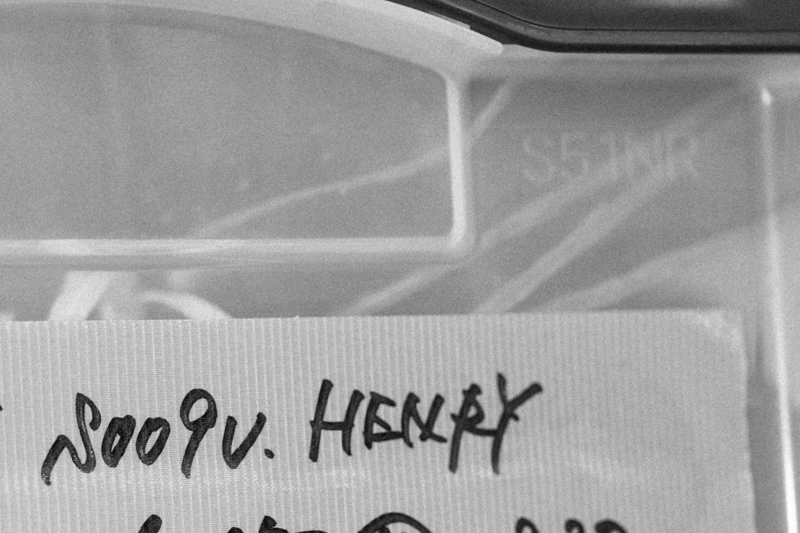
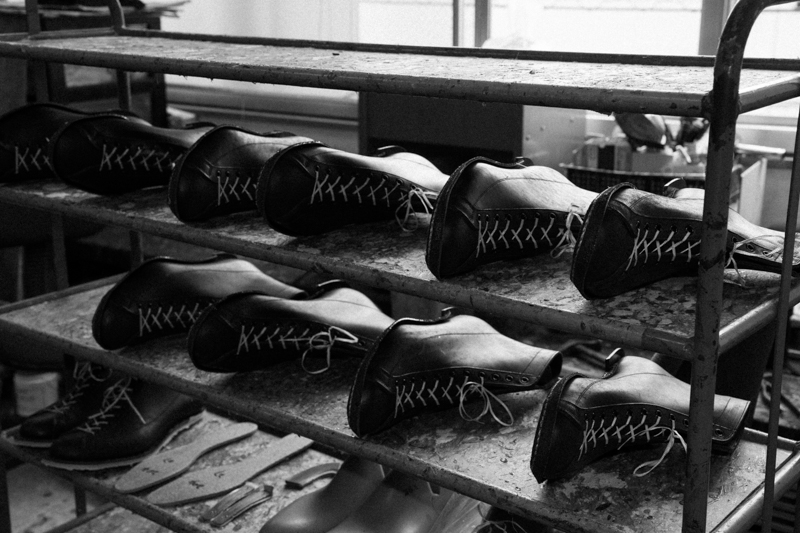
BROTHER BRIDGE operates two fully equipped factories in the Iriya and Asakusa areas, where each pair is carefully crafted through a hands-on production process.
(Top) Cut leather pieces are organized and stored by model. Each component is clearly identifiable at a glance, ready to move on to the next stage of production.
(Bottom) An upper just before the lasting process. Temporary laces have been threaded through, while the last remains visible inside, providing a clear glimpse of the construction before the upper is shaped around it.
02|CRAFTSMANSHIP
Many people have seen and worn a finished pair of boots. Yet surprisingly few may know what goes into making them. In footwear, the attention paid to each individual step can make a profound difference to the final result. So, what sets BROTHER BRIDGE’s approach to craftsmanship apart from others? Here, we take a closer look at just a few of the processes behind its production.
The design is first translated into 3D, from which the pattern is developed. When it comes to creating a distinctive toe shape like that of the KAMIYA model, the crucial factor is whether the pattern can be accurately translated into an original last. From lasting and stitchwork to welt attachment, sole construction, and edge finishing, every fundamental step in the making of the boot is carried out by highly skilled craftsmen. Working seamlessly between their own tactile sense and vintage machinery, they carefully assess the condition of each piece of cut leather as they shape and finish it.
Because every stage relies on the individual skill, touch, and judgment of the craftsman, combined with the use of vintage machinery, the process cannot be reduced to mechanical mass production. It is precisely this hands-on approach that gives each pair its distinctive vintage character and silhouette, while achieving an unexpectedly comfortable fit and feel.
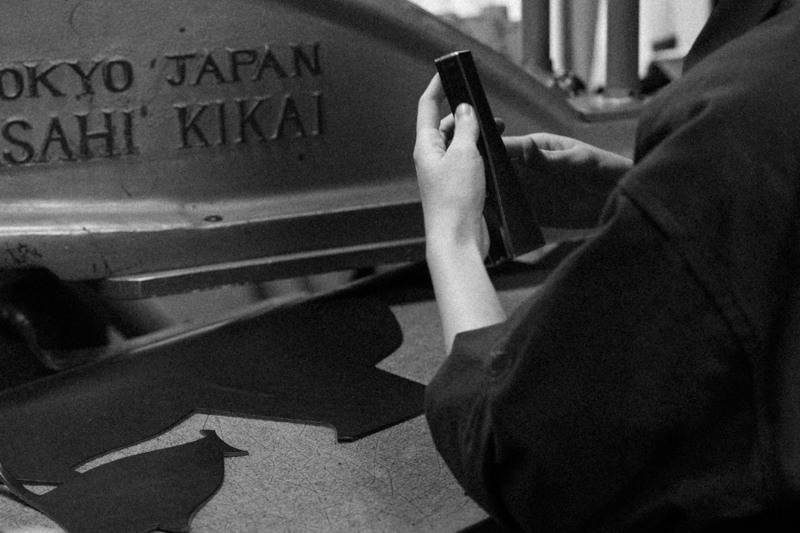
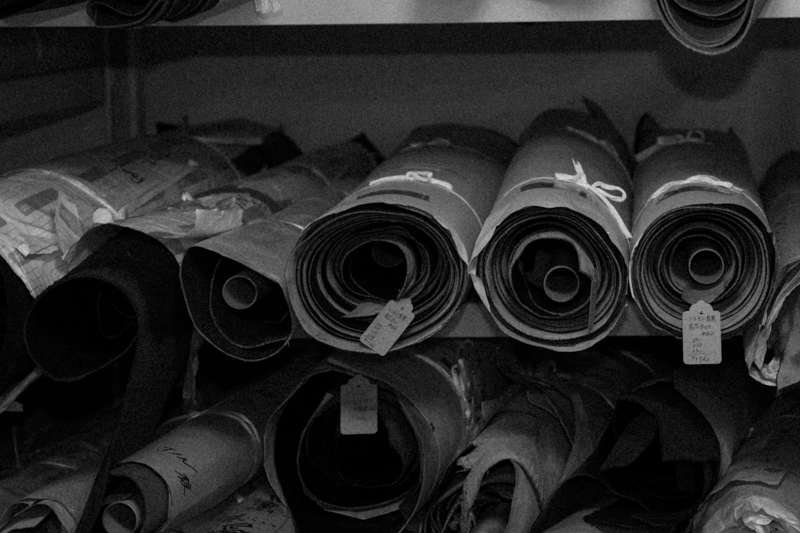
(Top) Each component requires a differently shaped piece of leather. Rather than relying on machines, every piece is carefully and evenly finished by hand, one at a time.
(Bottom) A large stock of raw hides awaits processing. Every pair of boots begins its journey from this very state.
03|GOODYEAR WELT
BROTHER BRIDGE employs the Goodyear welt construction, a traditional shoemaking method developed in the late 19th century by Charles Goodyear Jr. in the United States. In this construction, the upper, insole, and welt are stitched by machine to a strip of ribbing attached to the insole.
Because the upper is not directly stitched to the outsole, the sole can be replaced once it becomes worn down, allowing the boots to be resoled and worn for many years to come. This construction not only contributes to the durability of the boots, but also makes them well suited to long-term wear and repair.
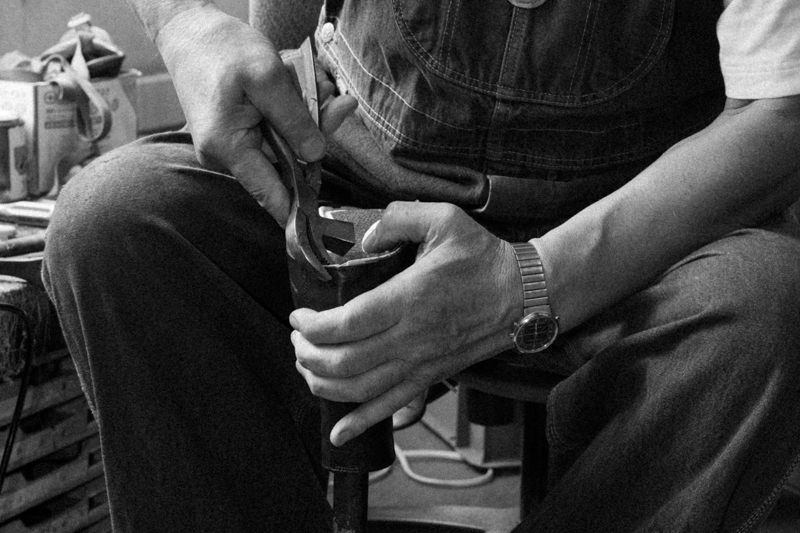
The excess leather from the upper is folded inward and carefully prepared so that it can be securely stitched together with the welt. Each boot is finished by hand, one foot at a time, which naturally limits the number of pairs that can be completed in a single day.
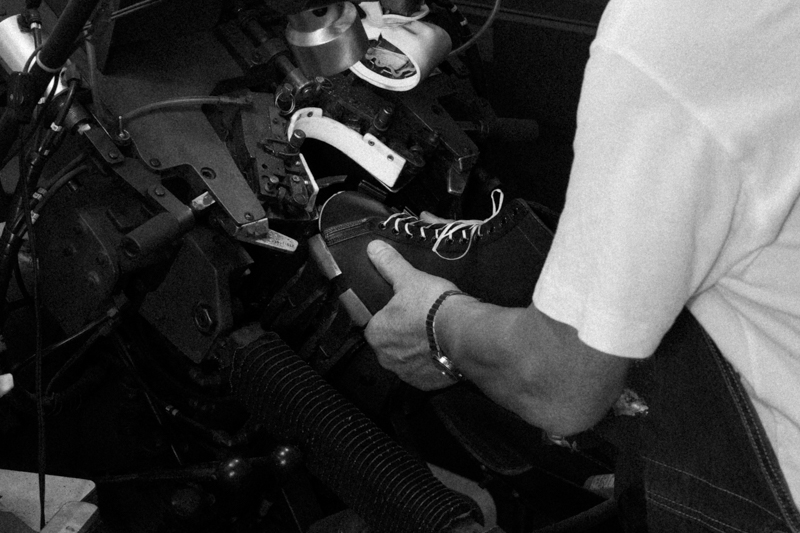
The boot is secured to a machine to shape and refine the toe. Since the KAMIYA boots feature a particularly voluminous toe, the craftsman carefully adjusts the curvature and overall proportions to achieve the desired balance.
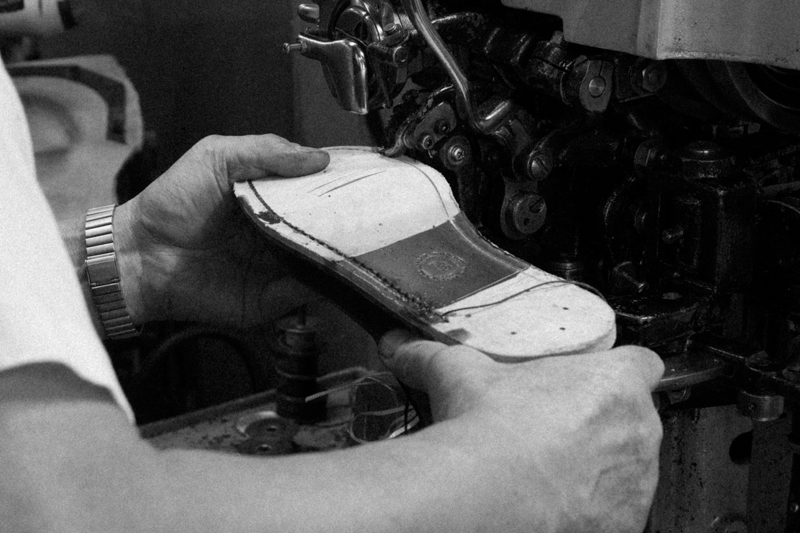
The insole is stitched using a sewing machine, a crucial step that leads into the attachment of the welt and outsole. The number of stitches and the spacing between each one reveal a level of character and craftsmanship rarely found in mass-produced footwear.
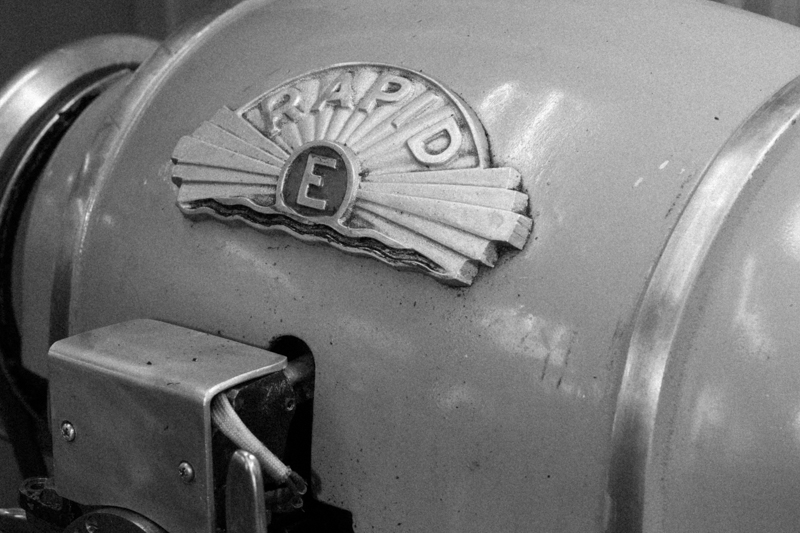
The Rapid E is the machine used to stitch the outsole onto the boot. Without this vintage machine in operation, the boots envisioned by KAMIYA could not be brought to completion. In fact, every machine used throughout the other stages of production is also a vintage piece, many of them decades old.
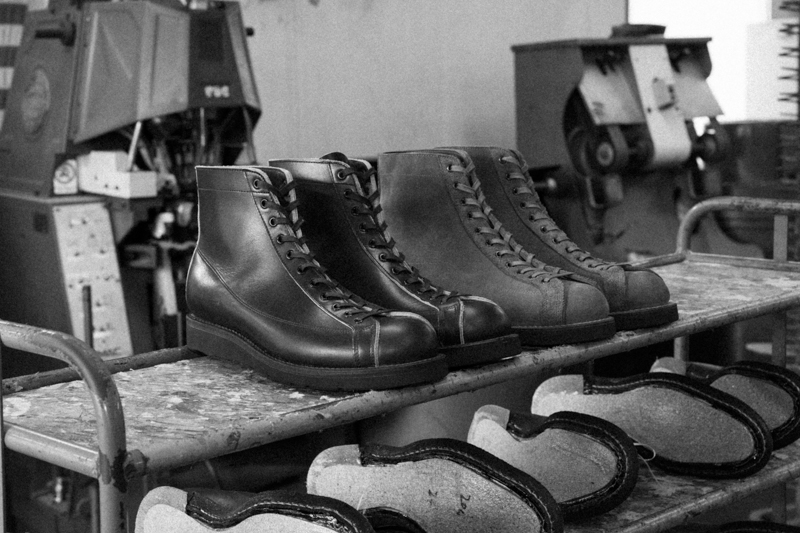
The finished boots are the result of every step in the process coming together. It is worth emphasizing that, because they are made through such a pure and hands-on approach, each pair is completed only after countless trials and errors, as well as unexpected challenges along the way. What emerges is a finished product shaped not by a streamlined production line, but by the accumulated skill, judgment, and persistence of the craftsmen behind it.
04|DESIGN
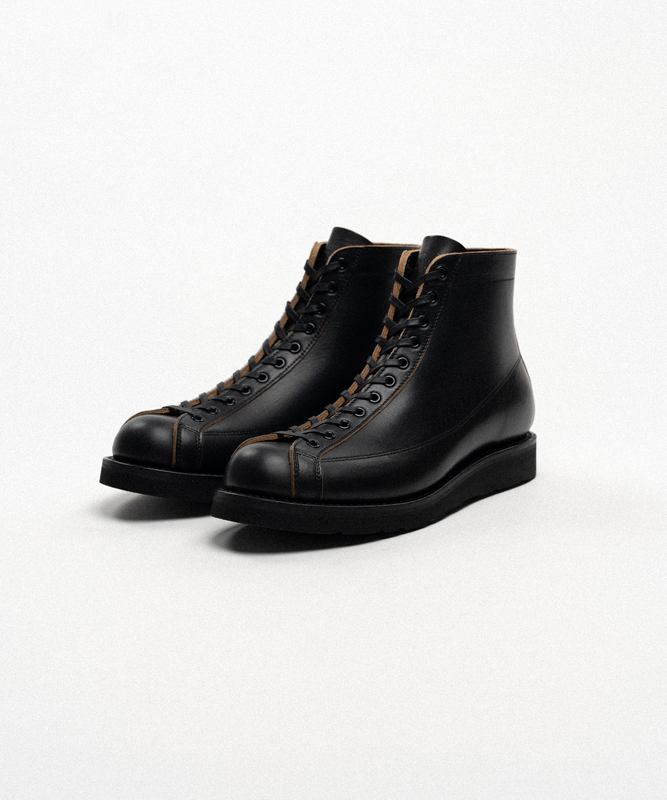
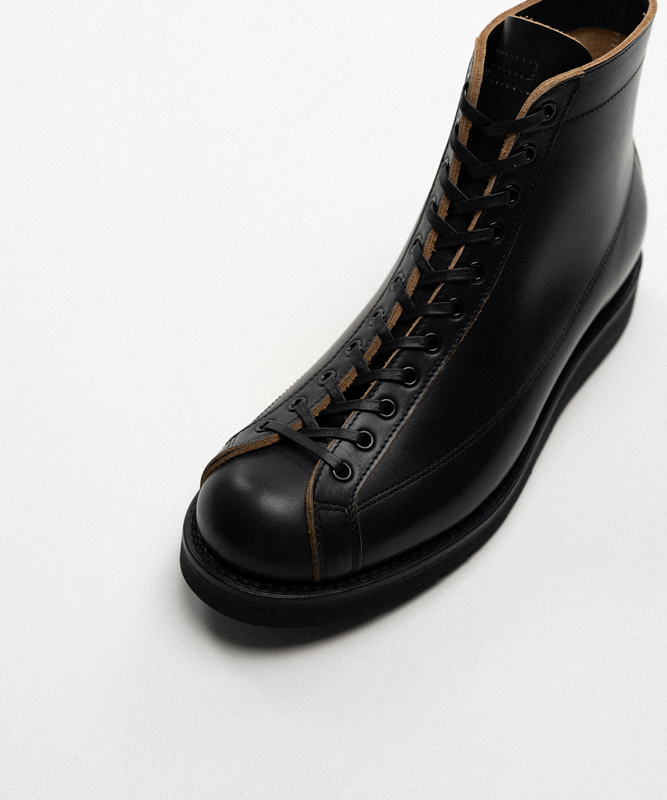
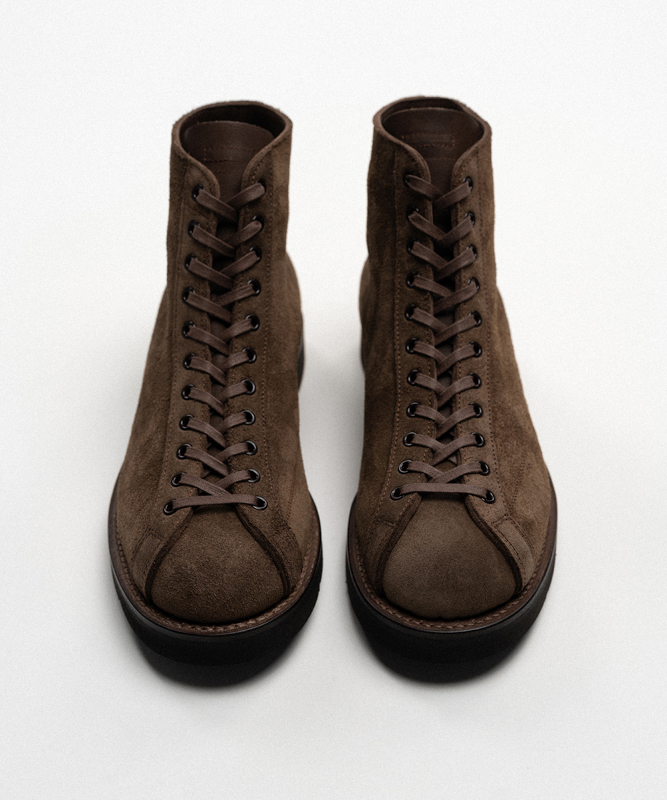
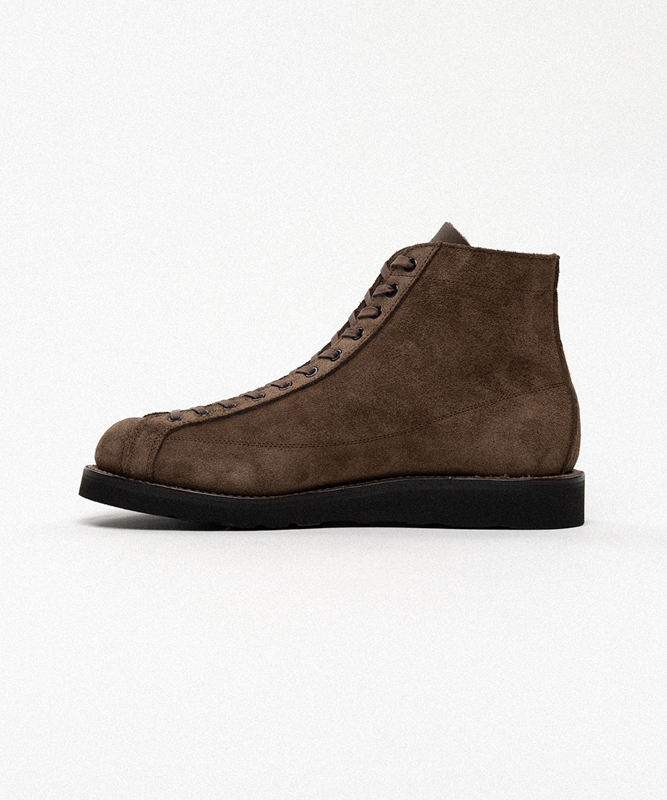
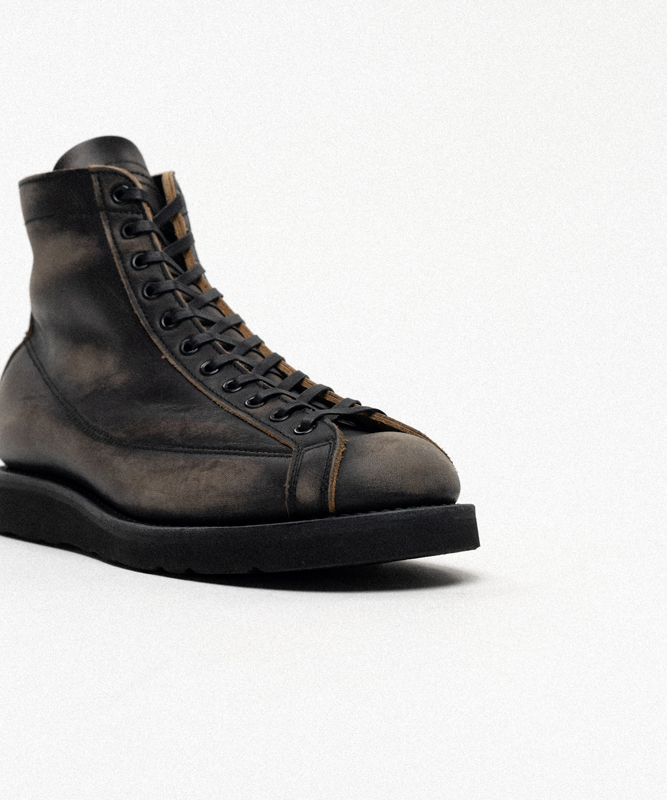
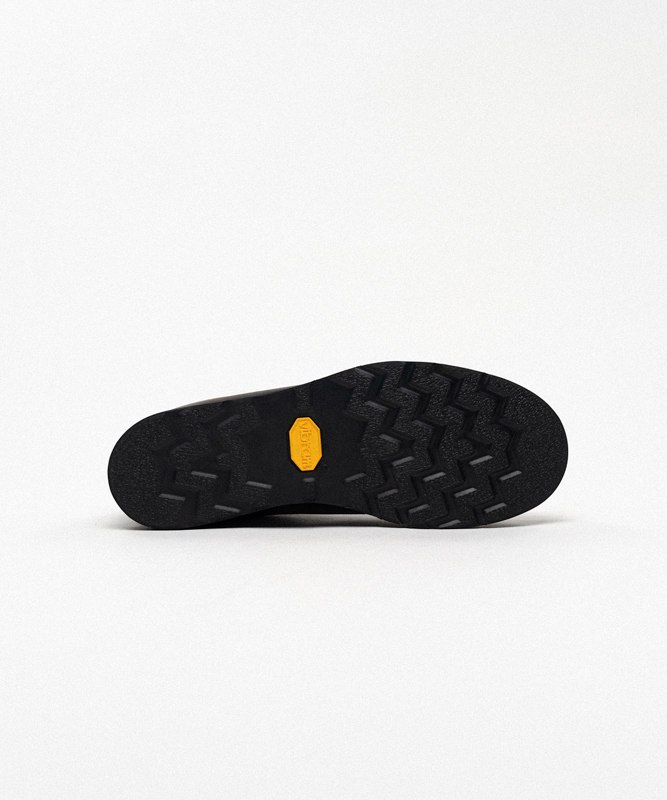
From the outset, Koji Kamiya envisioned an athletic boot with a substantial, voluminous toe. Using BROTHER BRIDGE’s signature HENRY as the foundation, the design process focused on incorporating the silhouette and nuances of the boots Kamiya himself had worn over the years into this new model.
The three versions—black, brown, and processed—each feature a distinct treatment to the upper. The black model is made from calf leather with a brown core, allowing the underlying brown tone to gradually emerge with wear. The brown model uses a soft, roughout leather that offers a supple feel and begins to conform naturally to the foot from the very first wear. The processed model, meanwhile, embodies KAMIYA’s signature approach. The brown-core calf leather is intentionally treated with abrasions and distressing to create a distinctly vintage character from the outset.
Whichever model you choose, the boots are designed to develop a deeper sense of character and attachment with every wear, ultimately becoming a pair that is uniquely your own. We recommend wearing them as often as possible—ideally almost every day—during the first six months to a year, allowing the leather and silhouette to evolve naturally with you.
